
A missed appointment never costs just one time slot. It costs a wasted hour of staff time, a provider standing in an empty exam room, and a client who books with a competitor instead of calling back. That’s the real reason appointment reminder software has become a baseline expectation for healthcare practices and service businesses alike. The value goes well past convenience: Done right, it protects revenue that’s already been earned.
Think about a dental office with fifteen appointments booked for the day. Three patients forget. That’s not a scheduling hiccup; that’s real production lost:
Multiply that across a month and the number gets uncomfortable fast. Outbound reminders exist to close that gap before it opens, turning a reactive front desk into a team that stays ahead of its own calendar.
Automated appointment reminders work through triggers built into a scheduling system. A booking gets made, a text or call goes out at a set interval, and the patient or client either confirms, reschedules, or ignores it. That last option is the problem. Automated texts are easy to dismiss with a thumb swipe, and a recorded call rarely gets a callback. Automation handles volume well. It doesn’t handle hesitation, confusion, or the kind of last-minute reschedule that needs an actual conversation.
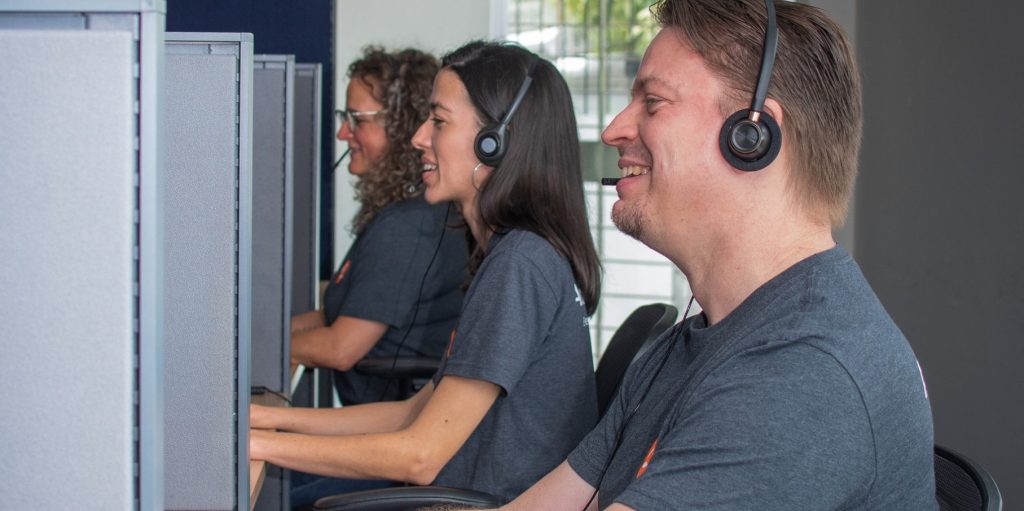
This is where answering service appointment scheduling earns its place in the workflow. When our virtual receptionists call on behalf of your practice, they can:
That coverage runs 24/7/365, in English and Spanish, so a reminder call goes out whenever it’s needed, not just during business hours. The tone of a live call also does something automation can’t. It signals that a business takes the appointment, and the patient’s time, seriously.
The strongest setups don’t pick one approach over the other. AI-driven reminders handle the routine first and second touch points at scale, and trained receptionists step in for the calls that need judgment, like a patient who’s missed reminders twice already or one requesting a same-day change. That’s the hybrid model behind our appointment setting services, and it’s the same logic we break down in AI vs. human vs. hybrid answering if you want the fuller comparison.
Reminder workflows carry extra weight in healthcare, where a missed visit can mean a delayed diagnosis or a gap in ongoing care. We build our medical appointment scheduling service to run on HIPAA-compliant workflows and connect directly to the systems your practice already uses, through CRM and EMR integrations, so a reminder call triggers the moment a visit is booked instead of getting pulled from a spreadsheet at the end of the day.
Picture a law firm with a consultation booked for Thursday morning. An automated text goes out Tuesday. The client means to confirm, gets pulled into something else, and never replies. By Thursday, the slot is empty, and the intake team has already invested time building that file. A live callback on Wednesday, the kind law firms build into their intake process, catches that silence before it becomes a no-show. The same pattern plays out with HVAC and inspection companies managing recurring service visits, where one missed confirmation can knock an entire week’s route out of order.
If your no-show rate is climbing, the fix usually isn’t more texts. It’s a workflow that pairs appointment reminder software with a live team that can actually close the gap automation leaves behind. That’s the difference between a calendar that looks full on paper and one that stays full when patients and clients actually show up.
A missed appointment is lost revenue the moment it happens, not a scheduling inconvenience to shrug off. Get started with AnswerHero to see how a hybrid reminder workflow can keep more of your booked time from slipping away.

Never miss an important call again with AnswerHero. Our team of professionals will answer calls 24/7/365 based on the information you provide about your business. We handle basic processes like taking messages and routing calls, but we can also make appointments and provide translation services. See the difference AnswerHero makes — choose your plan or contact us today.

Contracts or
Hidden Fees
We Answer Your Calls All Year Round
Bilingual Agents