
Every missed appointment disrupts your schedule and cuts directly into your revenue. When a patient forgets, a client doesn’t confirm, or a lead slips through without a follow-up, that time slot often goes unfilled. For many businesses, especially in healthcare and legal, even a few missed appointments each week can add up quickly.
Most of the time, the issue isn’t the service you provide; it’s what happens before the appointment ever begins. A reminder wasn’t sent, a call wasn’t made, or no one followed up when it mattered. That’s where appointment reminders come in. Whether you’re using automated appointment reminders or relying on live receptionists to handle outbound calls, the goal is the same: keep schedules full, reduce no-shows, and make sure every opportunity is followed through.
Appointment reminders don’t happen in isolation. In most businesses, they’re part of a larger outbound workflow designed to keep schedules full and prevent missed opportunities.
It usually starts with your existing systems. When an appointment is scheduled in a CRM or EMR, that data triggers the next step in the process. From there:
Appointment reminders play a larger role than sending notifications. Each step in the workflow is designed to ensure the appointment happens. If someone doesn’t confirm, the process continues. If they need to reschedule or have questions, it’s handled in real time. When that workflow connects directly to your CRM, EMR, or scheduling platform through integrations, it becomes part of your operations instead of another task.
For most businesses, the choice isn’t strictly between automation and live support. The most effective approach combines both: AI-powered appointment reminder software handles speed and volume, while live human receptionists step in when interaction, judgment, or flexibility is needed.
In a hybrid approach:
This balance is what allows businesses to stay efficient without sacrificing accuracy or customer experience. Technology keeps everything moving, while people ensure nothing important gets missed.
AnswerHero’s model combines AI-powered workflows with live human receptionists to support real-world interactions. If you’re comparing AI and human answering services more closely, it helps to understand how each approach works in practice.
Live receptionists work best when the interaction goes beyond a simple reminder and requires real-time response, clarity, or flexibility. In these situations, a conversation matters just as much as the reminder itself.
This often applies to:
In these moments, a reminder isn’t just about notifying someone, it’s about making sure the appointment actually happens.
Automation handles volume, people handle the moments that matter most. A live receptionist can confirm, adjust, and move the conversation forward before the opportunity is lost.
An automated appointment reminder service uses technology to send notifications without requiring staff to manually manage outreach. These tools are typically part of a broader appointment reminder system or scheduling platform that helps businesses manage outreach at scale.
They can include:
Automated appointment reminder software is built for speed and efficiency. It can send large volumes of reminders instantly and consistently, making it especially useful for routine communication. This approach works well in situations involving:
For many businesses, including healthcare practices, automated patient appointment reminders play an important role in staying organized and keeping schedules on track. But these systems have limits, especially when interactions don’t follow a predictable pattern or require real-time decision-making.
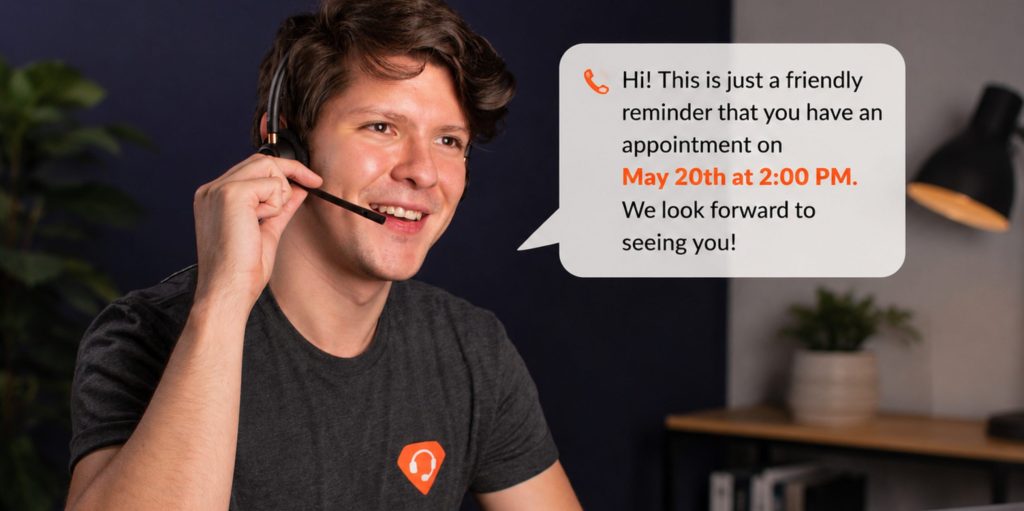
Live appointment reminder services rely on trained human receptionists to contact customers directly. Instead of sending a message and hoping for a response, a real person handles the interaction in real time.
These services are typically part of a broader professional answering service, where receptionists follow custom workflows, represent your business, and adapt based on how the conversation unfolds.
Here’s where live reminder services stand out:
A live reminder call does more than notify someone about an appointment. It gives your team a chance to secure the time slot, update information, and move the conversation forward while you still have the person on the phone.
Both automated appointment reminders and live reminder services aim to solve the same problem, but they do it in very different ways. The right choice depends on how much flexibility, control, and interaction your business needs.
Cost and scalability:
Consistency vs. adaptability:
Customer experience:
Handling complexity:
Automated appointment reminders are most effective when the process is simple, repeatable, and doesn’t require real-time interaction. In these situations, speed and consistency matter more than conversation.
This typically includes:
For example, a well-configured patient appointment reminder system can handle routine outreach efficiently, ensuring that every appointment gets a timely reminder without adding extra work for your team.
Automation works best when nothing unexpected happens. But when a customer needs to reschedule, asks a question, or misses a detail, that’s where the limitations start to show.
The right approach depends on how your business actually operates day to day. The goal isn’t just to send reminders, it’s to make sure appointments are confirmed, followed through, and don’t turn into lost opportunities.
Here are a few factors to consider:
High-volume environments often rely on automated appointment reminders to keep up with demand. Businesses with fewer appointments but more complex interactions may benefit from live support.
Simple confirmations can be handled through appointment reminder software. When conversations involve changes, questions, or back-and-forth, a live receptionist can step in and handle it immediately.
Healthcare and legal environments often require accurate, timely communication tied directly to systems and workflows. In these cases, having both automation and human support can help maintain consistency and reliability.
Some customers are comfortable with a quick text or email. Others expect a more personal experience, especially when the appointment carries more importance.
Automated appointment reminders and live support both play a role in modern business operations. Automation brings speed and consistency, while live receptionists provide flexibility and real-time interaction. When used together, they create a more reliable way to keep schedules full and prevent missed opportunities.
AnswerHero’s approach is built around that balance. Our team combines AI-powered workflows with live human receptionists to manage reminders, scheduling, and follow-up communication as a seamless extension of your business. Explore how AnswerHero’s appointment reminder and scheduling services can help you reduce no-shows, capture more opportunities, and keep your operations running smoothly.
Never miss an important call again with AnswerHero. Our team of professionals will answer calls 24/7/365 based on the information you provide about your business. We handle basic processes like taking messages and routing calls, but we can also make appointments and provide translation services. See the difference AnswerHero makes — choose your plan or contact us today.

Contracts or
Hidden Fees
We Answer Your Calls All Year Round
Bilingual Agents